General Surgery

Hernia

Diagnosis and surgical treatment of hernia using appropriate open or minimally invasive techniques.

Hernia medical treatment

What is Hernia?

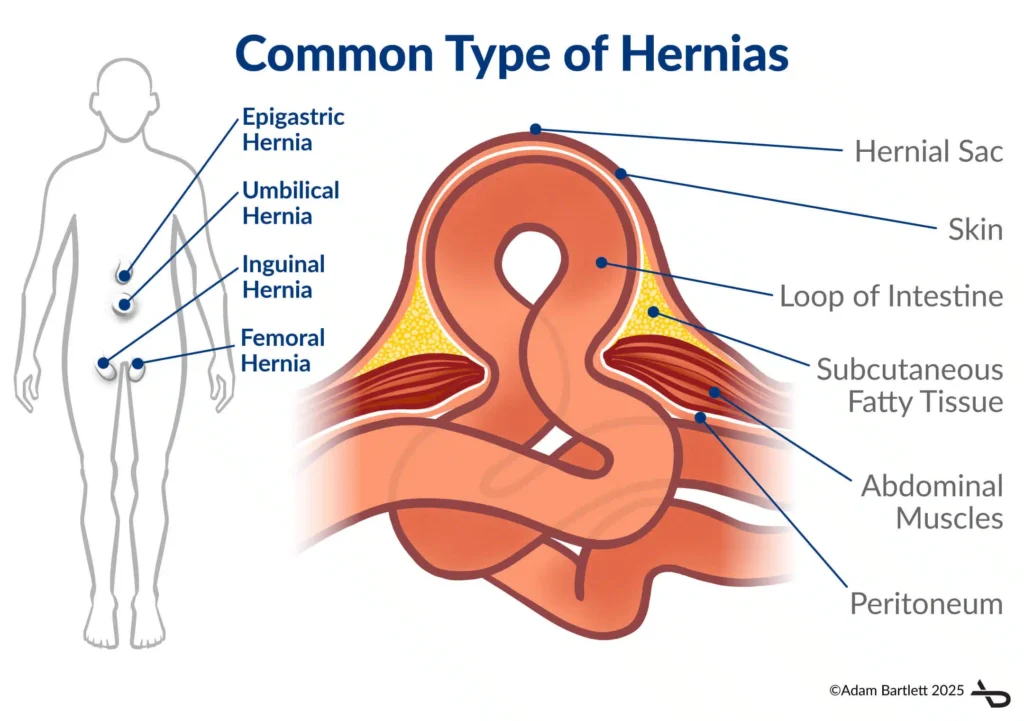
A hernia happens when an internal organ or tissue pushes through a weak area in the surrounding muscle. Hernias commonly occur in the abdomen or groin and may appear as a swelling or bulge.

The bulge may become more noticeable when standing, coughing, lifting something heavy or straining. Some hernias cause mild discomfort, while others can cause pain or gradually become larger.

A hernia usually does not repair itself permanently. Whether treatment is required depends on the type and size of the hernia, symptoms, general health and examination findings.

When surgery is required, laparoscopic hernia repair may be an option for selected patients. The appropriate treatment is decided after a proper clinical assessment.

Have Questions About Your Condition?

Book Consultation →

Frequently Asked Questions

01What is a hernia?+

A hernia happens when tissue or part of an organ pushes through a weak area in the surrounding muscle. It often appears as a swelling or bulge.

02Can a hernia go away without surgery?+

A hernia usually does not repair itself permanently. Whether surgery is needed depends on the type of hernia, its size, symptoms and your overall health.

03What are the common symptoms of a hernia?+

A visible bulge, swelling, discomfort or pain are common symptoms. The bulge may become more noticeable while coughing, standing, lifting or straining.

04What is laparoscopic hernia surgery?+

Laparoscopic hernia surgery is a minimally invasive method of repairing a hernia through small incisions. It is suitable for selected patients.

05How long does recovery take after hernia surgery?+

Recovery depends on the type of hernia, the procedure performed and your general health. Your surgeon will provide specific advice about returning to normal activities.

Medical Disclaimer: The information provided on this page is for general educational purposes and is not a substitute for professional medical advice, diagnosis or treatment. Individual treatment decisions should be made after consultation with a qualified healthcare professional.